Why Your Commercial Kitchen Needs More Than Just a Fire Extinguisher: The Role of Ansul Systems
May 14, 2026 6:33 pm Leave your thoughtsIf you run a restaurant or manage a commercial kitchen in Longview, TX, or Tyler, TX, you already know how fast things can go wrong near an open flame. Grease builds up, temperatures spike, and in a matter of seconds, a small flare-up can become a serious fire. A portable fire extinguisher sitting in the corner might feel like enough, but the reality is that it falls far short of what modern fire safety compliance for restaurants actually requires.
That is where Ansul systems come in, and understanding their role could be the difference between a close call and a catastrophe.
What Makes Commercial Kitchens So Fire-Prone
Commercial kitchens operate under conditions that are genuinely unlike any other environment. The combination of high heat, open flames, cooking oils, and grease-laden vapors creates a near-constant fire risk that intensifies with every service hour. Cooking oils and animal fats are particularly dangerous because they can ignite at temperatures that are regularly reached during normal cooking operations. Once a grease fire starts, it spreads quickly across surfaces, hoods, and ductwork, often before a person can even locate a fire extinguisher.
Beyond the cooking surface itself, the ventilation system becomes a major hazard over time. Grease accumulates inside the hood and duct system, and without proper maintenance, that buildup becomes highly flammable. A fire that starts on the stovetop can travel up through the hood and into the ducts within seconds, turning a manageable situation into a building-threatening emergency. This is exactly why fire protection in commercial kitchens cannot rely on a single handheld device. The risks are layered, the environment is complex, and the response needs to be automatic and immediate.
What an Ansul System Actually Does
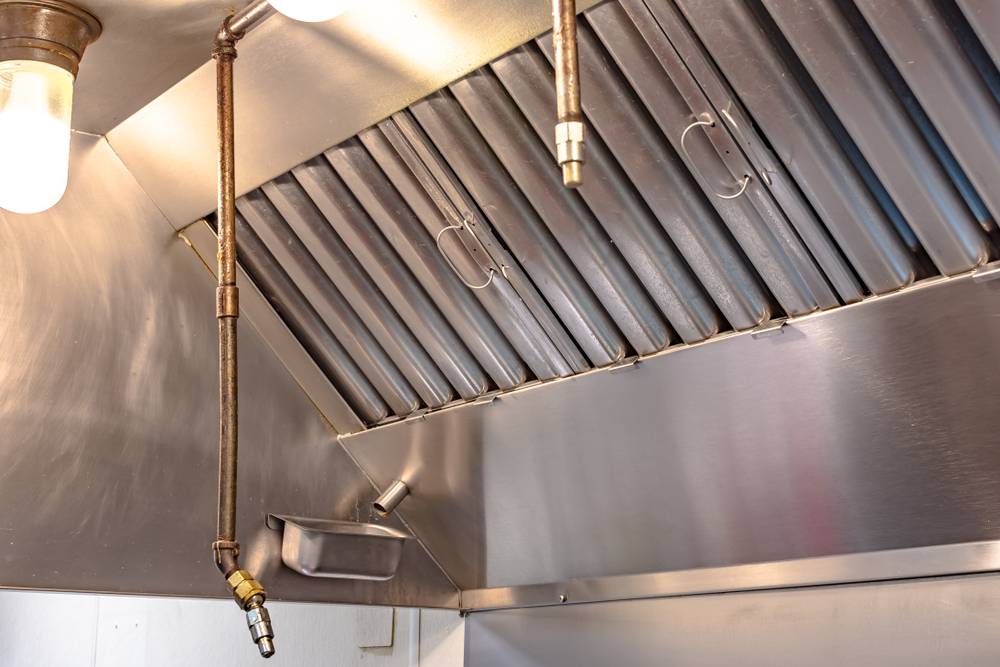
An Ansul system is an engineered kitchen fire suppression system designed specifically for the hazards found in commercial cooking environments. Unlike a standard fire extinguisher that requires a person to physically operate it, an Ansul system is fully automated. It detects heat at the source, activates without human intervention, and discharges a wet chemical agent directly onto the cooking appliances, the hood, and the plenum area where grease vapors collect.
The wet chemical agent used in these systems works by reacting with hot grease and cooking oils to create a soapy foam layer, a process known as saponification. This foam blankets the fire, cutting off its oxygen supply and preventing re-ignition. At the same time, the system automatically shuts off the gas supply to the cooking equipment, which is a critical step that a person using a handheld extinguisher would have to remember to do manually under extreme stress.
For restaurant owners in Longview, TX, and Tyler, TX, having a properly installed and maintained Ansul system is not just a smart operational choice. It is also a cornerstone of fire safety compliance for restaurants, as required by local codes, the National Fire Protection Association (NFPA), and most commercial insurance policies. Without it, you are not only putting your kitchen at risk, you are likely out of compliance with the regulations that govern your business.
The Importance of Regular Ansul System Maintenance
Installing an Ansul system is only the beginning. Like any life-safety equipment, it requires consistent, professional maintenance to function reliably when it is needed most. Ansul system maintenance typically involves semi-annual inspections conducted by a certified technician who checks every component of the system, including the nozzles, fusible links, agent tank, pull station, and automatic gas valve.
Over time, nozzles can become clogged with grease residue, fusible links can degrade from heat exposure, and the chemical agent itself can lose its effectiveness. A system that has not been properly serviced may fail to activate, activate only partially, or discharge in a way that does not adequately cover the cooking equipment. In each of these scenarios, the result is the same: the fire suppression system you are counting on does not do its job.
Regular maintenance also keeps your documentation current, which matters enormously when it comes to fire safety compliance for restaurants. Health departments, fire marshals, and insurance carriers all want to see proof that your suppression system has been inspected and serviced on schedule. Gaps in that record can lead to fines, failed inspections, or denied insurance claims following a fire. For restaurant operators in Longview, TX, staying current on Ansul system maintenance is not just about protecting the kitchen; it is about protecting the entire business.
Restaurant Hood System Service and Why It Works Hand in Hand with Fire Suppression
Your Ansul system and your hood system are two components of the same fire safety infrastructure, and they need to be treated that way. Restaurant hood system service involves the regular cleaning of the hood, filters, plenum, and ductwork to remove the grease accumulation that builds up during normal cooking operations. When grease is allowed to collect unchecked, it creates the exact conditions that Ansul systems are designed to address, but it also undermines the effectiveness of those systems.
Here is the key relationship: a heavily grease-laden hood and duct system can overwhelm even a properly functioning Ansul system. The chemical agent is calibrated to handle a defined hazard level. When that hazard level has been amplified by months of uncleaned grease buildup, the system may not be able to fully suppress the fire. This is why NFPA 96, the standard for ventilation control and fire protection of commercial cooking operations, requires both regular hood cleaning and a functioning suppression system.
For kitchens in Tyler, TX, and Longview, TX, scheduling restaurant hood system service and Ansul system maintenance through the same fire protection provider makes practical sense. It ensures that both systems are evaluated together, that any compatibility issues are identified, and that your kitchen is documented as fully compliant following each service visit. Treating these as two separate concerns handled by different vendors at different times introduces gaps that can have serious consequences.
Choosing the Right Fire Protection Partner
Not every fire protection company has the specialized knowledge required to properly service commercial kitchen suppression systems. When you are evaluating providers for your restaurant in Longview, TX, or Tyler, TX, there are several factors worth considering. First, look for a company whose technicians are certified specifically in kitchen fire suppression systems, not just general fire extinguisher service. Ansul system maintenance requires hands-on training and familiarity with the specific models and configurations used in commercial kitchens.
Second, ask about their experience with restaurant hood system service and whether they can coordinate both services under one inspection visit. A provider who understands how the hood and the suppression system interact will give you a more thorough evaluation than one who only looks at one component in isolation.
Third, consider their knowledge of local fire codes and the requirements specific to Longview, TX, and Tyler, TX. Fire safety compliance for restaurants can vary by jurisdiction, and working with a provider who is familiar with the local fire marshal’s expectations will help ensure your documentation holds up during inspections.
Finally, look for a company that communicates clearly and keeps detailed service records on your behalf. When an inspection comes around or an insurance question arises, having organized documentation of every service visit is invaluable.
Conclusion
A fire extinguisher is a tool of last resort. An Ansul system is a proactive, engineered layer of protection that works automatically and immediately when conditions demand it. For commercial kitchens in Longview, TX, and Tyler, TX, combining a properly maintained Ansul system with regular restaurant hood system service is the foundation of real fire protection. It keeps your team safer, keeps your business compliant, and gives you the confidence that your kitchen is genuinely prepared for the risks it faces every day.
Need Fire Protection Systems in Tyler, TX?
Welcome to Anchor Safety Inc.: the premier fire protection system and equipment provider of Longview, TX. Anchor Safety Inc. specializes in consultation, service, sales, and installation for fire protection systems for homes, offices, restaurants, computer server rooms, and document rooms. We carry and service all major brands, including Amerex, Ansul and Kidde. Anchor Safety Inc. is a member of FEDOT and the NAFED, as well as the Longview Chamber of Commerce. In business since 1990 with over 50 years of industry experience under our belts, you can trust in our expertise when it comes to fire safety. Give us a call for a free estimate or consultation for your fire safety.
Categorised in: Fire Suppression Systems
This post was written by admin