What to Do in Case of a Fire: A Step-by-Step Guide
September 3, 2026 3:05 pm Leave your thoughtsA fire can turn from a manageable situation into a life-threatening emergency within moments. For families and businesses in Longview, knowing what to do before smoke, heat, and confusion make decisions difficult can help everyone respond more safely.
Quick answer: If a fire starts, alert everyone nearby, get out of the building immediately, stay outside, and call 911 from a safe location. Never go back inside for belongings, pets, paperwork, or equipment. Only consider using a fire extinguisher on a small, contained fire when you have the correct extinguisher, know how to use it, have a clear escape route, and can do so without putting yourself at risk.
What local readers should know
Everyone in a home or business should know at least two possible ways out when practical and where to meet after evacuating.
Longview property owners should make sure exits, hallways, and doors remain accessible instead of waiting until an emergency to discover an obstruction.
Businesses throughout Gregg County should make fire safety procedures clear to employees who may need to evacuate customers, visitors, or coworkers.
Smoke alarms and appropriate fire safety equipment should be checked regularly rather than assumed to be ready.
Once you have escaped a fire, remain outside until emergency personnel tell you it is safe to return.
Why Does Knowing What to Do During a Fire Matter in Longview?
Knowing what to do during a fire matters in Longview because a practiced response reduces hesitation when every second of an emergency counts. Homes, offices, shops, warehouses, restaurants, and other properties present different evacuation challenges, so occupants should understand their exits and emergency procedures before smoke or flames appear.
Local buildings range from single-family homes around Pine Tree and Spring Hill to commercial properties along major corridors such as Eastman Road and Loop 281. Each setting can present different obstacles during an evacuation.
Anchor Safety Inc serves the Longview area, and we encourage property owners and businesses to treat fire preparedness as an ongoing safety responsibility rather than something considered only after an emergency.
What Should You Do First If You Discover a Fire?
If you discover a fire, your first priorities are to alert others, evacuate, and call 911 from a safe location. Do not delay your escape to collect personal belongings or investigate how far the fire has spread, especially when smoke, heat, or rapidly changing conditions are present.
Follow these steps:
Alert people nearby. Warn occupants immediately and activate the building’s fire alarm if one is available.
Move toward a safe exit. Use the nearest safe evacuation route.
Avoid dangerous areas. Do not move toward visible flames or heavy smoke in an attempt to reach your usual exit.
Stay low if smoke is present. Smoke and toxic gases can make escape more difficult.
Get outside and stay outside. Go to the designated meeting location.
Call 911. Provide the location and any relevant information you can safely give.
Never re-enter the building. Tell firefighters if you believe someone or a pet may still be inside.
These basic steps apply whether the emergency occurs at a residence near downtown Longview or a commercial facility elsewhere in Gregg County.
What Warning Signs Mean You Should Evacuate Immediately?
Visible flames, spreading smoke, intense heat, alarms, electrical burning odors, or a fire that cannot be controlled immediately are signs that evacuation should take priority. Trying to determine the exact cause can waste valuable time and expose occupants to additional danger.
Warning signs include:
Smoke spreading beyond a small, isolated area
Flames growing or moving to nearby materials
Heavy smoke blocking visibility
A door or surrounding area that feels unusually hot
Crackling, popping, or signs of an electrical fire
A fire involving unknown chemicals or materials
An extinguisher that is unavailable or unsuitable
Any situation where you no longer have a clear escape route
For Longview businesses, employees should know that protecting inventory or equipment should never take priority over evacuation.
When Should You Use a Fire Extinguisher?
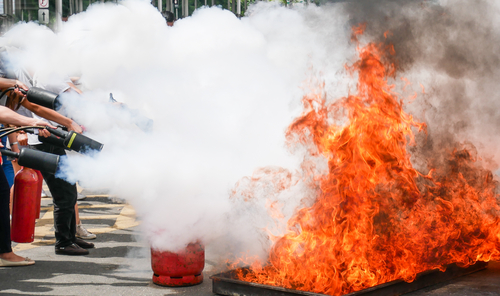
A fire extinguisher should only be considered for a small, contained fire when you have the proper extinguisher, understand how to operate it, and still have a safe exit behind you. If the fire is spreading, producing substantial smoke, or making you uncertain about your safety, evacuate instead.
The commonly taught PASS method means Pull the pin, Aim at the base of the fire, Squeeze the handle, and Sweep from side to side.
An extinguisher is not a substitute for calling emergency services or evacuating when conditions are unsafe. Businesses in Longview should also make sure employees understand their workplace emergency procedures and are not expected to take unnecessary risks.
What Are Common Fire Risks Around Local Properties?
Common fire risks around local properties include cooking incidents, electrical problems, heating equipment, overloaded outlets, combustible materials, and improperly handled ignition sources. The specific risks vary considerably between an East Texas residence, restaurant, office, warehouse, workshop, and other commercial facility.
Cooking areas deserve particular attention because heat sources can be located close to oils, packaging, towels, and other combustible materials. Electrical equipment and extension cords also require appropriate use and regular attention.
Commercial properties around Longview, Kilgore, White Oak, and Lakeport may have additional risks based on their operations, equipment, stored materials, and occupancy.
How Can Longview Property Owners Prepare Before a Fire?
Longview property owners can prepare for a fire by planning evacuation routes, keeping exits clear, checking fire safety equipment, and making sure occupants know where to meet outside. Preparation should be routine so that people are not trying to create an emergency plan while an actual emergency is unfolding.
Useful steps include checking smoke alarms according to manufacturer instructions, keeping exit routes unobstructed, identifying two escape routes when possible, and discussing evacuation procedures with family members or employees.
Businesses should also review fire extinguishers and other required safety equipment on an appropriate schedule. DIY visual checks can identify obvious concerns, but inspection, servicing, or replacement of specialized fire safety equipment should be handled by qualified professionals when required.
What Mistakes Should You Avoid During a Fire?
The biggest mistakes during a fire are delaying evacuation, returning inside, attempting to fight a fire that is too large, and assuming someone else has called 911. A better approach is to make life safety the priority and follow a simple, practiced evacuation procedure.
Mistake: Stopping to gather belongings.
Consequence: Valuable escape time can be lost.
Better approach: Leave immediately and remain outside.
Mistake: Going back for a person or pet.
Consequence: You can become another person requiring rescue.
Better approach: Tell responding firefighters who may still be inside and where they may be located.
Mistake: Fighting a spreading fire.
Consequence: Smoke, heat, or flames can cut off your escape route.
Better approach: Evacuate and call 911.
Mistake: Ignoring blocked exits at a business.
Consequence: An obstruction that seems minor during normal operations can become a serious evacuation problem.
Better approach: Keep designated exit paths accessible at all times.
What Is a Common Local Fire Emergency Scenario?
A common local scenario is a small fire beginning in a kitchen, work area, or around electrical equipment and initially appearing manageable. The situation becomes more dangerous when someone spends too much time trying to save property or control flames while smoke begins spreading through the building.
Imagine a Longview employee notices smoke and a growing fire in a work area. Instead of repeatedly attempting to control it, the safer response is to alert other occupants, follow the evacuation procedure, leave through a safe exit, account for people at the meeting point when possible, and contact 911.
This is an illustrative scenario, not a customer case study.
What Fire Safety Solutions Can Help Reduce Risk?
Fire safety solutions can help reduce risk by making appropriate equipment available and helping property owners maintain their preparedness. The exact solution depends on the building, occupancy, hazards, existing equipment, and applicable requirements.
For homes and businesses, that may include appropriate fire extinguishers and other fire safety equipment or services based on the property’s needs.
Our team can help local property owners understand available fire safety options without treating emergency equipment as a replacement for evacuation planning or professional emergency response.
How Do DIY Fire Safety Checks Compare With Professional Service?
DIY fire safety checks are useful for spotting obvious problems, while professional service is appropriate when equipment requires inspection, maintenance, servicing, replacement, or specialized knowledge. Property owners can routinely notice blocked exits or visible equipment concerns, but they should not attempt technical work they are not qualified to perform.
A practical approach combines routine awareness with appropriate professional service. That is particularly valuable for area businesses responsible for maintaining fire safety equipment across workplaces with employees, customers, or visitors.
What Areas Do We Serve Around Longview?
Our local focus includes Longview and the surrounding East Texas area based on the service information provided for this article. Property owners in nearby Gregg County communities such as White Oak and Lakeport, as well as neighboring areas such as Kilgore, may contact us to confirm service availability for their specific location.
What Can Happen If Fire Preparedness Is Ignored?
Ignoring fire preparedness can leave occupants without a clear evacuation plan and allow equipment or exit problems to remain unnoticed until an emergency occurs. For Longview businesses, a fire can also interrupt operations and affect property, inventory, equipment, employees, and customers.
Preparation cannot prevent every emergency, but it can eliminate avoidable confusion. Knowing exits, maintaining clear pathways, reviewing equipment, and practicing emergency procedures are practical steps property owners can take before they are needed.
FAQ
What should I do first if there is a fire in my Longview home?
Alert everyone and evacuate your Longview home immediately using a safe exit. Once outside, move to your predetermined meeting location and call 911. Do not return for possessions or pets. If someone may still be inside, give that information to responding firefighters rather than attempting to re-enter.
Should I try to put out a small fire myself?
Only consider using an extinguisher when the fire is small and contained, you have the correct equipment, and you have a safe escape route. You should also know how to use the extinguisher. If smoke or flames are spreading or you feel unsafe, evacuate immediately and call 911.
What should Longview businesses include in a fire evacuation plan?
Longview businesses should establish clear evacuation routes, an outside meeting location, methods for alerting occupants, and procedures appropriate to their workplace. Employees should understand what to do before an emergency occurs. The plan should also account for the property’s layout, occupancy, operations, and applicable safety requirements.
How often should I check my fire extinguisher?
Fire extinguishers should be checked and maintained according to the equipment manufacturer’s instructions and any requirements that apply to the property. Because requirements can vary by equipment and setting, Gregg County homeowners and businesses should avoid assuming that an extinguisher is ready simply because it has never been used.
Should I go back inside if my pet is still in the building?
No, you should not re-enter a burning or smoke-filled building to retrieve a pet. Tell firefighters as soon as they arrive that a pet may be inside and provide useful location information if you have it. Re-entering can expose you to smoke, heat, flames, and changing conditions.
What should I do if smoke blocks my normal exit?
Use another safe escape route rather than moving into dangerous smoke or flames. This is why Longview households and businesses benefit from identifying alternative exits before an emergency. If you cannot escape safely, call 911 and follow the emergency dispatcher’s instructions for your circumstances.
Why should Longview employees practice evacuation procedures?
Practicing evacuation procedures helps Longview employees become familiar with exits, meeting locations, and their responsibilities before an actual emergency creates confusion. A workplace may include customers or visitors who do not know the building, making clear employee awareness especially useful during an evacuation.
Can fire safety preparation prevent every fire?
No, fire safety preparation cannot prevent every fire, but it can help people recognize hazards, maintain appropriate equipment, and respond more effectively during an emergency. For East Texas property owners, the goal is to reduce avoidable risks and make evacuation procedures familiar before a dangerous situation develops.
Be Ready Before a Fire Emergency Happens
Fire safety in Longview starts long before anyone sees smoke or flames. A clear evacuation plan, accessible exits, appropriate equipment, and an understanding of when to leave rather than fight a fire can help families, employees, and property owners respond more safely.
Strengthen Fire Preparedness at Your Longview Property
We help local property owners explore fire safety solutions appropriate to their needs, with safety and preparedness at the center of the conversation.
Categorised in: Fire Safety Tips
This post was written by admin